
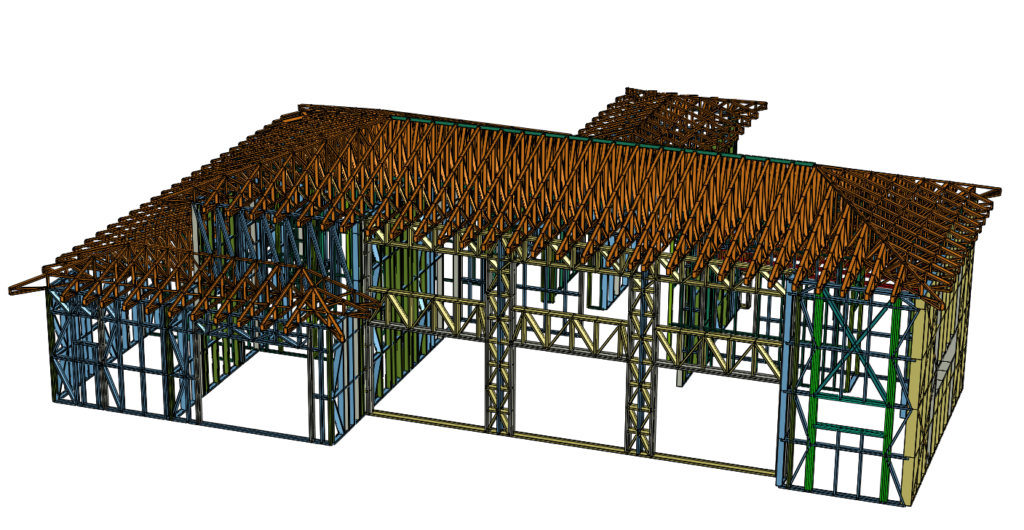
Structural Engineering approach for tall wall systems requires more than standard section selection—it demands a clear understanding of load paths, slenderness effects, and real-world constructability. In one of our recent projects, BIM driven structural wall engineering in USA a 17-ft-high wall posed unique structural challenges due to increased slenderness and amplified bending effects under lateral loads.
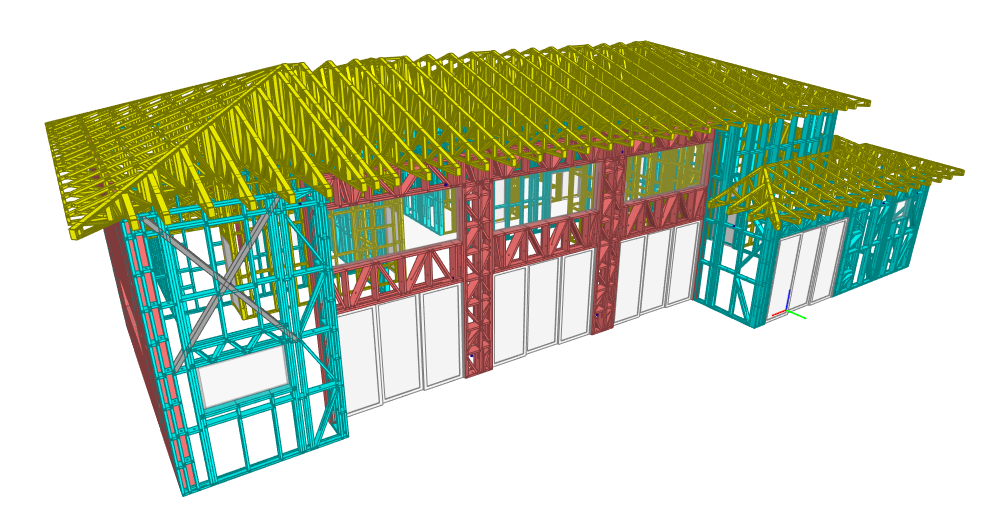
Impact of Wall Height and Slenderness
As wall height increases, slenderness becomes a governing factor, significantly magnifying bending moments under wind and lateral pressures. For a 17-ft wall, controlling deflection and ensuring stability becomes just as critical as meeting strength requirements.
Gravity Load Transfer to the Wall
The wall was subjected to combined roof loads transferred through the structure:
- Roof Dead Load: 25 psf
- Roof Live Load: 12 psf
- Snow Load: 3 psf
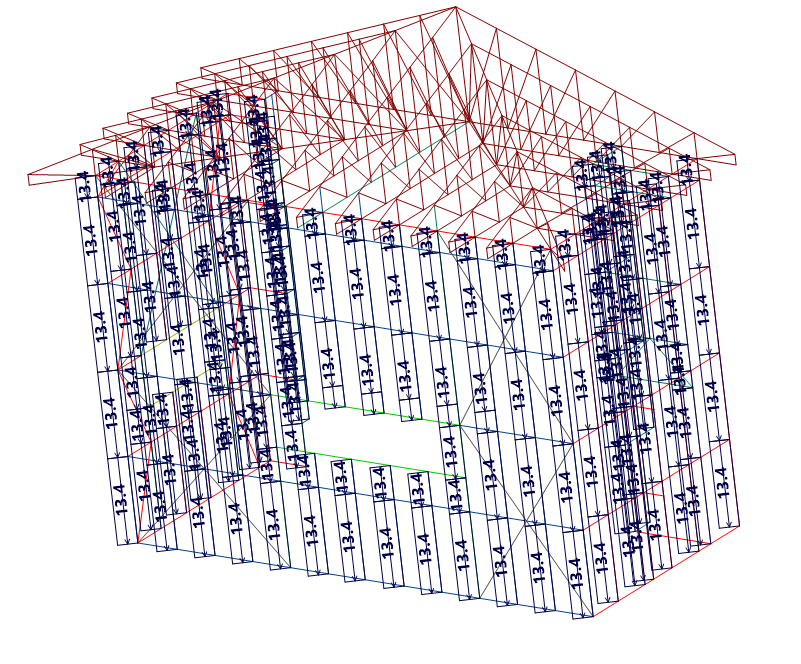
Although 20 psf is generally considered ideal for dead load design, the wall was intentionally designed for 25 psf dead load to meet specific client requirements, adding an extra margin of safety and robustness.
In addition to roof loads, the wall also carries a uniform gravity load of 10 psf along its full height, accounting for self-weight and associated wall loads.
Lateral Load Demand and Design Strategy
The governing design condition was driven by a maximum lateral load resistance of tall wall system 37 psf, combined with increased axial demand from gravity loads. Initially, a 6” wall profile with higher thickness was considered. However, after detailed evaluation, this approach proved less efficient for controlling deflection and slenderness effects.
Instead, we adopted a 10” wall profile with a lower thickness, which provided:
- Improved section stiffness
- Better bending resistance
– Enhanced deflection control
– Efficient material utilization without over-thickening the steel
This optimization ensured structural performance while maintaining economy and constructability.
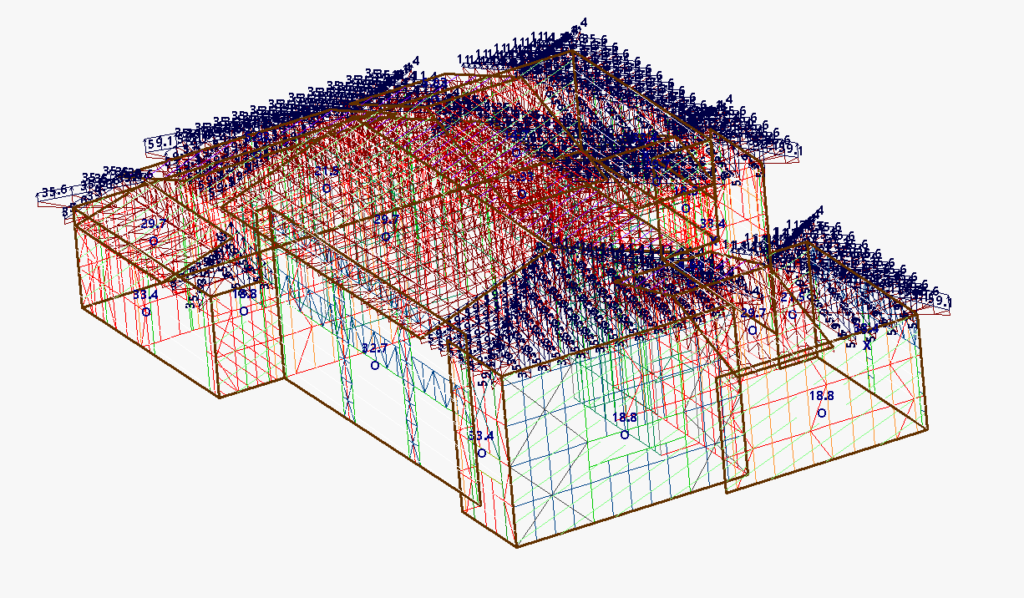
Engineering Beyond Software
At UBC BIM, our design philosophy goes beyond automated outputs.
- Manual Calculations:
All critical wall designs are supported by manual calculations for wall designs to validate software results and ensure code compliance under combined axial and lateral loads.
- Rough Engineering During BOM Stage:
Even during the Bill of Materials (BOM) phase, we perform rough engineering checks to validate member sizes and steel tonnage. This proactive step helps eliminate surprises later in production or on site.
- Integrated Modelling & Detailing:
Our modelling and detailing workflows are tightly integrated with engineering decisions, ensuring accurate steel quantities, machine-ready outputs, and minimal revisions during fabrication.
Delivering Constructible and Efficient Designs
By combining engineering judgment, manual verification, and BIM-driven detailing, we deliver wall systems that are not only code-compliant but also practical to manufacture and install. This approach enables us to optimize profiles, control costs, and ensure predictable on-site performance—especially for challenging tall-wall conditions.
At UBC BIM, engineering is not just about meeting numbers—it’s about delivering confidence, constructability, and accuracy from concept to CNC. UBC offers permit sets, pre-bid packages with 3D BIM model along with bill of materials for project cost estimation, modelling and detailing services, engineering calculations for light gauge steel/cold formed steel/ timber framed building structures in USA.